
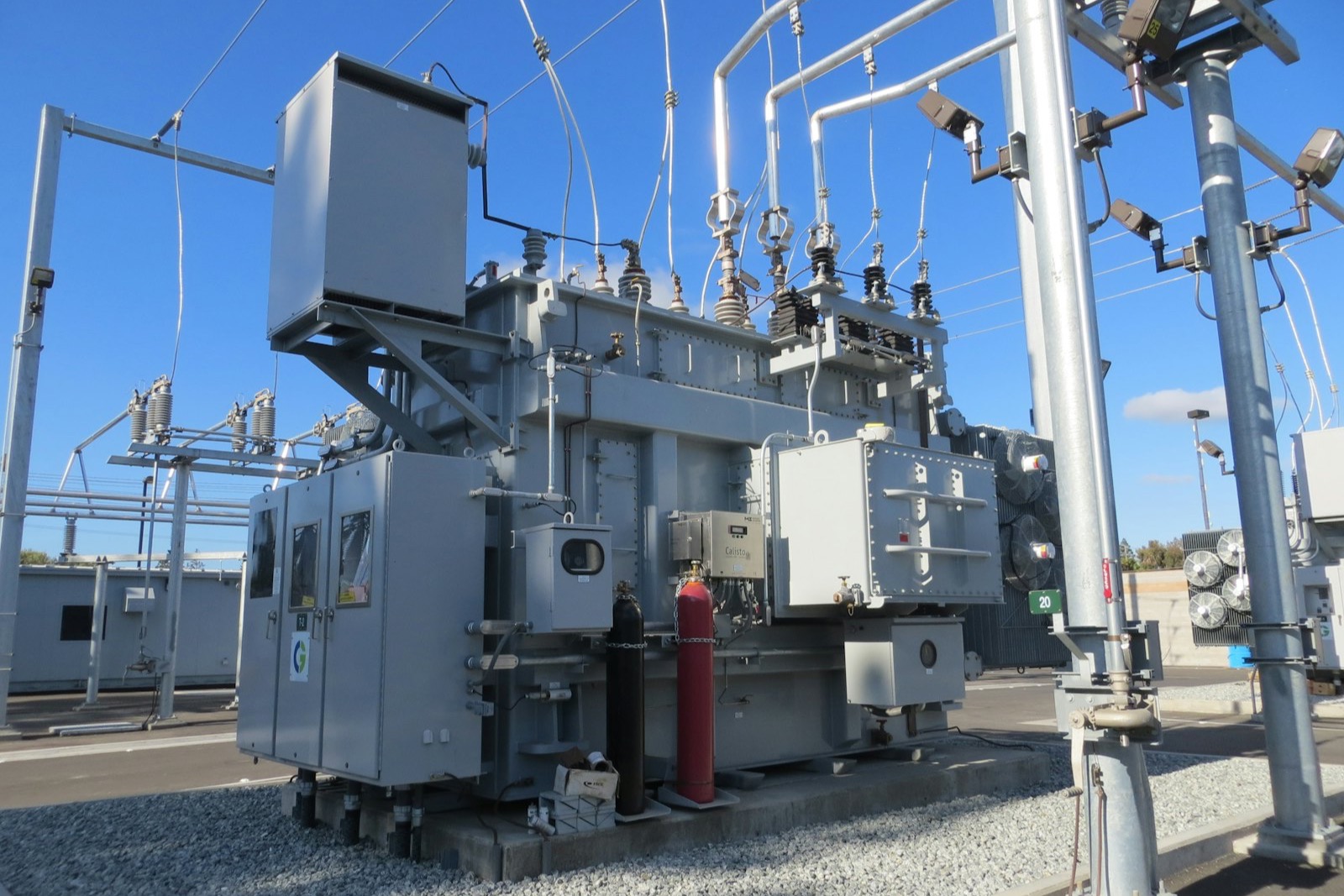
The NYISO issued the 2026 Q2 Short-Term Assessment of Reliability (STAR) on July 15, covering the study period from April 15, 2026 through April 15, 2031. The headline finding is that Danskammer units 1-4 cannot deactivate as proposed on August 1, 2026. The units will be compensated under an Interim Service Provider rate while the NYISO moves to solicit permanent solutions for a Lower Hudson Valley reliability need that persists into 2029 and 2030.
At the August 3 TPAS/ESPWG meeting, the NYISO reviewed its near-term reliability need statement and the study assumptions that will govern the Q3 STAR which is now under development. On August 20, the NYISO issued the solicitation seeking solutions to the Lower Hudson Valley need, with responses due October 19, 2026. Together, these materials outline both the current state of the short-term reliability picture and the process that will resolve it over the remainder of the year.
Here is what the reports say and what they mean for generators and market participants.
Danskammer Remains In-Service
Because permanent solutions to the Generator Deactivation Reliability Need have not entered service or demonstrated their planned capabilities, Danskammer 1-4 is required to remain in-service until at least January 15, 2027, unless permanent solutions become available sooner. The units will be compensated under an Interim Service Provider rate commencing August 1, 2026.
CHPE entered commercial operation on May 13, 2026. Although the NYISO has approved CHPE’s eligibility to participate in the NYISO markets, including as an eligible Installed Capacity provider, the NYISO believes that the new resource has yet to demonstrate its planned power capability within its reliability planning processes. Without CHPE achieving its planned power capability as determined by the NYISO, NYISO planning processes continue to observe deficiencies in both New York City and the Lower Hudson Valley over the short-term horizon.
The Q2 STAR also evaluated the retirements of High Acres (Zone C, 9.6 MW nameplate) and Coxsackie GT (Zone G, 21.6 MW nameplate) as Initiating Generators. No Generator Deactivation Reliability Need was observed for High Acres. For Coxsackie GT, the NYISO did not identify a BPTF need, though Central Hudson identified a non-BPTF Generator Deactivation Reliability Need. Central Hudson has indicated that a STATCOM and capacitor bank at the New Baltimore 69 kV substation are expected in service by July 2026, with similar upgrades at South Cairo 69 kV planned for March 2027. Coxsackie GT must remain in-service until those upgrades are completed and have demonstrated their expected performance.
The Lower Hudson Valley Need
The deficiency narrowed but did not close. The Q1 STAR projected a Lower Hudson Valley BPTF deficiency beginning in 2027. Following the withdrawal of the Gowanus 2 & 3 and Narrows 1 & 2 deactivation notices on April 16, 2026, and with updated 2026 Gold Book demand forecasts, the Q2 STAR now shows no deficiency until 2029.
The figures assume planned projects perform. In the July 29 near-term reliability need statement, the NYISO noted that based on 2026 RNA and 2026 Q3 STAR assumptions, the Lower Hudson Valley deficiency may worsen to roughly 500 MW in summer 2029 and roughly 600 MW in summer 2030 if future planned projects are not placed in service and do not demonstrate their planned capabilities. If sufficient projects enter service on schedule, a deficiency would not be observed until summer 2032.
Near-Term Reliability Need. Because the deficiency would be resolved in whole or in part by retaining Danskammer 1-4, it is a Generator Deactivation Reliability Need. It arises within three years of the 365 days following the Q1 STAR Start Date, which also makes it a Near-Term Reliability Need and triggers the solicitation process.
New York City and Long Island
New York City deficiencies persist without CHPE. With the Gowanus and Narrows barges continuing to operate, and without CHPE having demonstrated its planned power capability, the Q2 STAR shows a Zone J BPTF deficiency of 189 MW over five hours in 2026, growing to 481-751 MW over nine hours by 2030. Even with all identified projects entering service on schedule and demonstrating their capabilities, the NYISO projects New York City to be deficient again as early as summer 2031, driven primarily by the planned unavailability of the NYPA small plants by December 31, 2030. The Q3 STAR will model those units, listed in 2026 Gold Book Table IV-6 at 517 MW across Zones J and K, as out of service starting January 2031. Absent changes to system plans or forecasts, the NYISO expects that deficiency to be identified as a reliability need in the Q3 STAR.
Long Island margins remain narrow. With the Far Rockaway GT1 ICAP Ineligible Forced Outage ending on June 17, 2026, there are no generator deactivations to report in Zone K. Margins nonetheless tighten to 36 MW in summer 2027 before the Propel NY project enters service, with the widest margin in the period at 103 MW in summer 2028.
The Solicitation
The NYISO issued the solicitation on August 20, 2026. Proposed solutions are due on or before October 19, 2026.
Who can submit. Only the Responsible Transmission Owners, Central Hudson, Con Edison, Orange & Rockland, and NYSEG, may propose regulated transmission solutions, each for its own transmission district. Other developers may propose temporary regulated generation or market-based solutions, which can include generation, transmission, or demand-side resources. Market-based solutions are not eligible for cost recovery under Rate Schedule 8 of the Market Administration and Control Area Services Tariff or Rate Schedules 14 or 16 of the OATT.
Evaluation. The NYISO will assess whether proposals are viable and sufficient under Section 38.6 of the OATT, individually or in combination. If the need changes in a subsequent STAR, the NYISO may select solutions addressing the changed need or withdraw the solicitation. Absent sufficient viable solutions, retention of the deactivating generators may be necessary, and the NYISO reiterates that RMR agreements are a last resort.
What the Q3 STAR Will Change
The Q3 STAR is scheduled to post by October 13, 2026, with the Q4 STAR commencing October 15. Three assumption changes are worth noting.
The evaluation will incorporate NYCA five-year zonal-average EFORd values for thermal generation in place of the NERC class-average values used previously. On the generation side, the retirement of Wheelabrator Hudson Falls (14.4 MW, Zone F, proposed deactivation date of December 31, 2026) is the deactivation added relative to the RNA assumptions, with National Grid assessing the non-BPTF impacts. Two small solar projects, Highview Solar and Niagara Solar, have withdrawn from the queue and are no longer included.
What This Means
For generators evaluating deactivation, the Danskammer outcome is a concrete illustration of how the Short-Term Reliability Process operates when planned replacement capacity has not yet proven itself. A project reaching commercial operation is not the same as a project demonstrating its planned power capability, and the STRP treats those as distinct milestones. Interim Service Provider status and compensation follow from that distinction.
For developers, the window is now open and closes October 19. Regulated transmission solutions are reserved to the four Responsible Transmission Owners, leaving other developers to propose temporary regulated generation or market-based solutions, the latter without access to cost recovery under the named rate schedules.
More broadly, the Q2 STAR reiterates a theme the NYISO has been building across its recent reliability reports and its flagship PowerTrends report. The reports describe a system where resource adequacy criteria are met only after assuming full utilization of emergency operating procedures, and where the early July 2026 heat wave produced generator outages in New York City and the Lower Hudson Valley at roughly two to three times planned levels. The NYISO frames continued development of new or repowered dispatchable resources as necessary to maintaining reliable service.
Looking Ahead
The solicitation letter also previews the long-term picture. Preliminary 2026 RNA results show the Lower Hudson Valley deficient by 300 MW in 2032, worsening to over 2,000 MW by 2036, even assuming planned projects are available as expected. The NYISO attributes this to demand growth, including large loads, and rising exposure to aging generation risk. The RNA is expected to be issued in November 2026. If reliability needs remain after post-RNA updates, a solicitation addressing the long-term needs, including the Lower Hudson Valley, will be issued in the first half of 2027.
The near-term question is whether CHPE demonstrates its planned power capability through this first summer of operation. The NYISO states that if it does, the near-term Generator Deactivation Reliability Need would likely be addressed, though a longer term need would still be expected beginning in 2032. We will continue to track the solicitation, CHPE’s performance, and the Q3 STAR.
About Luminary Energy
Luminary Energy LLC provides advisory services to wholesale power generators and market participants in NYISO and ISO New England. To learn more about Luminary Energy’s services or to connect with a member of our team, contact us at [email protected].